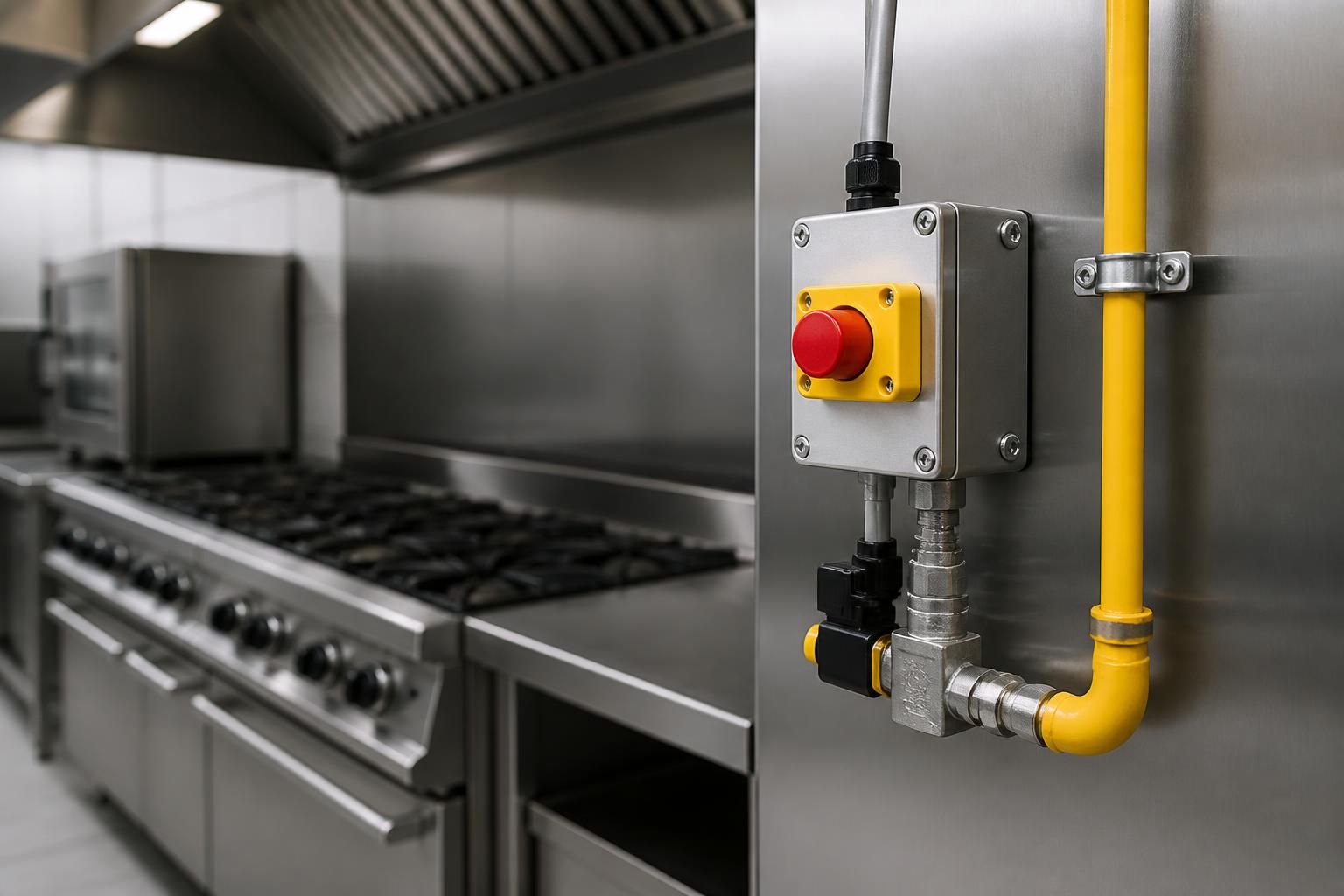
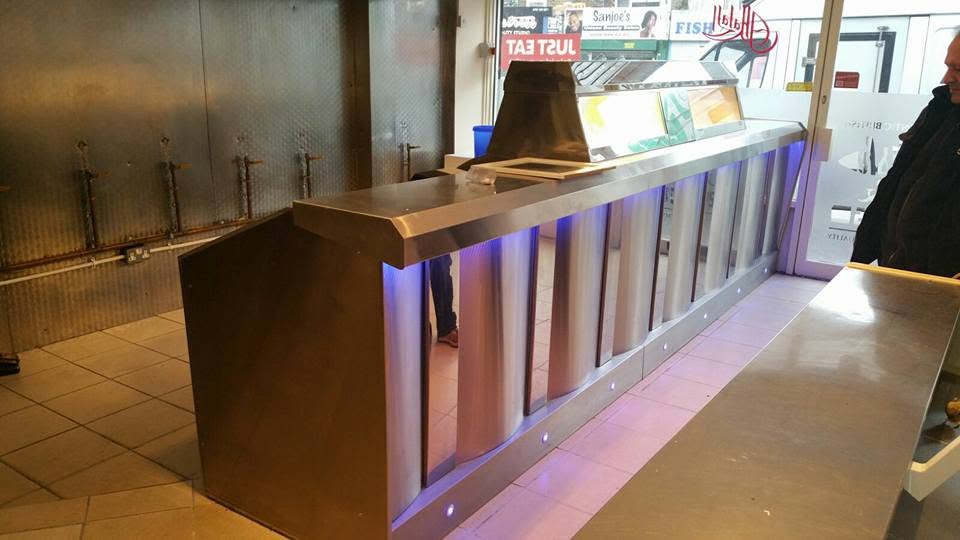
 When a commercial kitchen’s ventilation is working but the gas supply is not linked to it, safety gaps can appear fast. Staff may notice fans running without a cut-off, appliances staying live when extraction is off, or an old control panel that no longer matches the layout of the kitchen.
If you are managing a restaurant, takeaway, café, fish and chip shop, or mobile catering unit at Ware SG12 8NN, a gas safety interlock can help connect your gas system to your extraction system the right way. A&e gas engineering installs, checks, and supports these systems so your catering setup can respond when ventilation is unavailable or altered.
A gas safety interlock is designed to link the gas supply to the kitchen’s ventilation or extraction system. If the extraction side is not operating as intended, the interlock can stop gas from being available to the appliances it protects. That makes it a key part of many commercial catering setups, especially where frying, roasting, boiling, or high-output cooking equipment is used.
For busy sites around Ware SG12 8NN, the interlock is often part of a wider gas safety arrangement. It is not just a box on the wall. It is a control point that helps the kitchen respond to ventilation failure, building changes, appliance changes, and day-to-day wear on existing controls.
Interlock systems are often noticed only when something feels off. A kitchen may have fans running, but the appliances do not receive gas. Or the reverse can happen, where old controls no longer reflect the current kitchen arrangement after a refit or appliance swap.
If your site has had refurbishment work, new catering equipment, or a change to the extraction layout, the interlock should be checked alongside the rest of the gas installation. For businesses at Ware SG12 8NN, that is especially important when the kitchen is used daily and any gap in control can disrupt service and create avoidable risk.
A&e gas engineering handles gas safety interlock installation for commercial catering sites, with a focus on practical layouts that suit the way kitchens actually operate. We work on permanent kitchens and mobile catering units, including sites that use natural gas or LPG.
Before installation or modification, we look at the gas system, the extraction arrangement, and the appliances the interlock will protect. That helps us plan a setup that fits the site rather than forcing the kitchen to adapt to a control arrangement that was never meant for it.
From there, we can install a new interlock, adapt an existing setup, or support changes after appliance replacement or kitchen refurbishment. The aim is a control system that suits the site and supports safe gas use across the cooking line.
Gas safety interlocks are common across a wide range of catering premises. They are especially useful where cooking equipment produces heat, vapour, grease, or fumes that must be managed by extraction before gas appliances are used.
We work with sites such as:
Whether your kitchen is fixed or mobile, the control logic still needs to match the equipment and the way the site is used. That is why interlock installation is rarely a one-size job.
Gas safety interlock installation often sits alongside other catering gas work. If a kitchen is being fitted out, altered, or upgraded, the interlock may need to be installed at the same time as pipework changes or appliance work.
For Ware SG12 8NN and the surrounding area, A&e gas engineering can also support:
That joined-up approach helps avoid mismatched components or a control system that is installed after the rest of the kitchen has already moved on.
When we visit a site, the work starts with the existing setup. We need to see how the gas is routed, how the ventilation is controlled, and what appliances are connected to the line. From there, we can discuss the most practical way to install or adapt the interlock.
A typical visit may involve the following sequence:
For many businesses, that process is most useful during refurbishment, appliance changeover, or when a new commercial kitchen is being brought into use.
A&e gas engineering is based at Widford Rd, Hunsdon, Ware SG12 8NN, and serves commercial catering clients across Ware, Hertford, Bishop’s Stortford, Hoddesdon, Cheshunt, Enfield, Harlow, and wider parts of London, Hertfordshire, Essex, Bedfordshire, and nearby counties.
That local base matters when a kitchen needs a dependable point of contact for gas interlock installation, appliance changes, or checks on an existing catering setup. We work with independent food businesses as well as mobile catering operators who need a gas system that matches how they trade.
Not every site has the same arrangement, but many commercial catering kitchens use an interlock because gas appliances and extraction need to work together. The right setup depends on the layout, appliances, and ventilation design.
Yes, if the current arrangement still suits the site. If appliances, extraction, or pipework have changed, we can assess whether the existing interlock can be altered or whether a new setup is more practical.
Yes. We provide LPG catering gas services for mobile catering vans, food trucks, and trailers, including interlock-related work where the system design calls for it.
Interlocks are commonly used with commercial catering appliances such as fryers, ovens, cookers, and fish and chip ranges, depending on the site design and gas layout.
Yes. Interlock installation is often part of a new kitchen fit-out or a gas pipework modification project, especially where extraction and appliance placement are being planned together.
The safest answer is to have the system reviewed against the actual kitchen layout. If the gas controls no longer match the extraction system, or the setup has been changed over time, it is worth having it checked before use continues.
If your kitchen at Ware SG12 8NN needs a new gas safety interlock, changes to an existing control setup, or support after appliance or ventilation work, A&e gas engineering can help. We work on commercial catering gas systems with a focus on practical installation, clear control logic, and site-specific solutions.
To discuss your kitchen or arrange a visit, contact us on +447453919840 or email ayhanisik0704@gmail.com. Our working hours are Monday to Saturday, 08:00 to 18:00.
Speak With a Specialist
Tell us about your catering equipment, pipework, inspection needs, or LPG setup. We will help you decide the right next step for your commercial kitchen or mobile catering business.